We are living in an era when the liberal world order has fractured and the state has returned to the stage. The economic, political, and ideological foundations of globalization—long considered irreversible—have been shaken by the pandemic, wars, the energy crisis, and technological competition. In today’s world, the state once again intervenes in the economy, the ruler reclaims the center, and democracy acts on the impulse to defend its own values.
This three-part editorial focuses on new books that analyze this transformation through three distinct lenses:
-
The rise of economic nationalism
-
The power architecture of petro-monarchies
-
The conflict between democracies and autocracies
Read together, these works tell the grand story of our age: the return of the state, the personalization of power, and the politicization of values.
I. The State’s Return to the Economy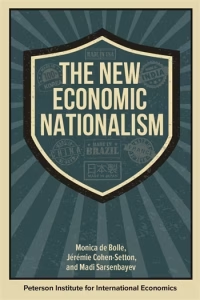
The New Economic Nationalism
Monica de Bolle, Jérémie Cohen-Setton, and Madi Sarsenbayev
Peterson Institute for International Economics, 2025
The “liberal economic consensus” that emerged after World War II—free trade, market-based growth, and institutional cooperation—has now given way to a new era in which the state once again directs economic life. This book explores the phenomenon of new economic nationalism in both historical and contemporary contexts.
The authors define economic nationalism as a policy framework aimed at enhancing national economic autonomy and self-sufficiency while also fostering growth and geopolitical influence. Tariffs, investment restrictions, migration controls, and industrial subsidies are its primary instruments.
The book spans a wide historical spectrum—from the corporatist economies of the 1930s to Latin America’s import substitution models, from the East Asian miracle to the statist capitalism of Xi Jinping’s China and Modi’s India. The authors show that while economic nationalism has stimulated growth in some cases, in others it has produced debt, inflation, and corruption—without fully explaining the social and political conditions that account for these divergent outcomes.
Rich with empirical case studies, The New Economic Nationalism adopts a comparative approach, examining U.S. industrial policies such as the CHIPS Act and Inflation Reduction Act alongside Brazil’s developmental experiments. This analysis demonstrates that economic nationalism is not a single, uniform model but a varied set of approaches shaped by national context.
While short-term effects may include job creation and growth, the authors warn that long-term outcomes can involve inefficiency, fiscal unsustainability, and geopolitical tension.
Coming from a liberal institution like the Peterson Institute for International Economics, the authors maintain a balanced tone—neither advocating a return to laissez-faire nor glorifying state intervention. Instead, they situate the inevitable rise of economic nationalism within its historical context, weighing its strengths and contradictions alike.
Ultimately, The New Economic Nationalism is a key reference for understanding the future of the global economy. It redraws the boundaries between nationalism and liberalism, offering valuable insights for both policymakers and scholars of political economy.
II. The Grand Strategies of Small Prince-States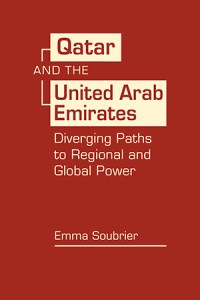
Qatar and the United Arab Emirates: Diverging Paths to Regional and Global Power
Emma Soubrier
Lynne Rienner Publishers, 2025
If the first book explored the state’s return to the economy, this second one examines a regime type in which the state itself merges with the personality of its ruler. Emma Soubrier defines Qatar and the United Arab Emirates as “prince-states”—polities where the personal preferences and ambitions of the ruler decisively shape both domestic and foreign policy.
Qatar pursues a soft-power–based strategy through media (Al Jazeera), sports diplomacy, and cultural investments, whereas the UAE relies more on military capacity and regional intervention. Soubrier regards both approaches as “post-energy” policies—performative in rhetoric yet often limited in substance.
Covering the period from the 2008 financial crisis and the Arab Spring to the 2017–2021 Gulf crisis, the book traces how the two countries’ paths diverged. The result is a striking anatomy of how wealthy yet fragile states project power through the character and agency of their rulers.
Soubrier demonstrates that the Gulf region serves not only as an arena of energy and trade but also as a unique laboratory of state-personality fusion.
If The New Economic Nationalism revealed the state’s return to the economy, this book shows how small petro-states have evolved into strategic global actors. It also prepares the ground for the third discussion—shifting our focus from economic and institutional power to ideological and moral conflict: how democracies respond when power itself becomes personal and absolute.
III. Wars Over Values
Why Democracies Fight Dictators
Sarah E. K. Schramm
Oxford University Press, 2024
While the first two books examined the state’s return to the economy (The New Economic Nationalism) and the architecture of autocratic wealth (Qatar and the UAE), this final work confronts the most consequential outcome of these transformations on the world stage: why and how democracies clash with authoritarian regimes.
In Why Democracies Fight Dictators, Sarah E. K. Schramm turns away from conventional explanations of war and focuses instead on psychology, perception, and values.
Schramm challenges the classic assumption that wars arise merely from material interests. She argues that conflicts between liberal democracies and personalist dictatorships are in fact value-based confrontations. Democratic leaders, she finds, perceive strongman rulers not simply as strategic adversaries but as moral negations of their own identity. This perception triggers emotional responses—especially anger and fear—that increase the likelihood of escalation.
Drawing on archival analyses of the Suez Crisis and the Gulf War, Schramm shows how Anglo-American leaders internalized their self-appointed role as guardians of the “free world.” The book reveals how, in defending liberal values, democracies sometimes adopt the very aggressive reflexes they claim to resist—exposing the moral paradoxes of the liberal order itself.
By introducing this “authoritarian animosity” dimension, Schramm expands the Democratic Peace Theory literature. Her statistical evidence and historical analysis demonstrate that emotions and cognitive biases play a pivotal role in shaping foreign policy—posing a sharp challenge to the rational-actor model that has long dominated International Relations.
Yet, as the author refrains from fully interrogating whether democracies contradict their own principles when waging such wars, a moral tension remains unresolved, a silence that both weakens and humanises the work.
As the concluding volume of this trilogy, the book suggests that war in the 21st century is once again being defined through values, and it leaves us with a disquieting question:
Can liberal democracies defend the free world without succumbing to their own anger?
The Return of the State, the Re-Creation of the World
Taken together, these three works reveal the layered transformation of global politics today:
-
The rebirth of the state in the economy (The New Economic Nationalism)
-
The architecture of autocratic wealth and personalized power (Qatar and the UAE)
-
The value-driven conflicts of democratic regimes (Why Democracies Fight Dictators)
Read as a whole, they illustrate the unraveling of the liberal international order and the rise of a new age defined by emotion, identity, and strategic nationalism.
Together, these books offer complementary lenses for understanding the direction of global politics:
-
The New Economic Nationalism — the re-statization of the economy
-
Qatar and the UAE — the personalization of power
-
Why Democracies Fight Dictators — the politicization of values
The result is more than an economic or military realignment; it is the portrait of a new statist era born from the collapse of the liberal order. The state is no longer merely a market regulator—it has become the carrier of identity, power, and emotion.
And in this new age, global politics revolves less around the question of “Who is right?” and more around “Who is legitimate?”